
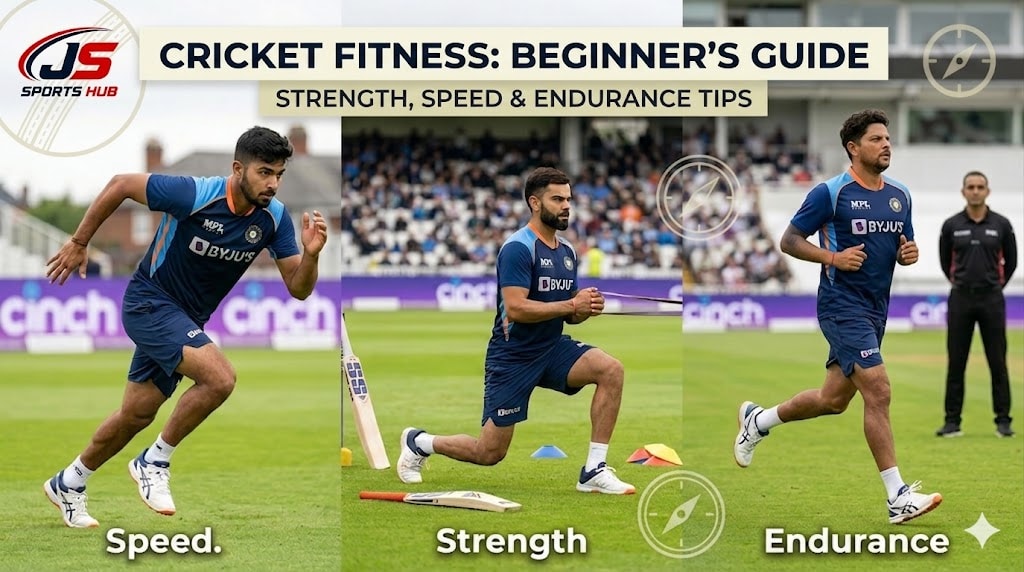

Introduction to Cricket Fitness
Cricket is no longer just a game of skill. In modern cricket, fitness has become just as important as technique. Cricket fitness tips for beginners are essential for every beginner. A player who is not fit cannot perform consistently, no matter how good their batting or bowling skills are. Beginners often focus only on learning shots or bowling actions, but they ignore fitness, which becomes a big problem later when they start playing competitive matches.
Fitness in cricket means having a strong, fast, and energetic body that can perform well throughout the match. A cricket match can last for hours, and in some formats even days, so players must have the ability to stay active for a long time without getting tired. That is why strength, speed, and endurance are considered the three main pillars of cricket fitness.
This guide will help beginners understand how to improve these three areas step by step in a simple and practical way and also how to build a long-term fitness habit that supports cricket performance for years.
Table of Contents
Importance of Fitness in Modern Cricket
Modern cricket has become very fast and demanding. Fielders need to save every possible run, batsmen need quick running between wickets, and bowlers need to maintain speed and accuracy for long spells. Without fitness, a player slows down and starts making mistakes.
Fitness also reduces the risk of injuries. Many beginners face muscle pulls, cramps, or fatigue because their body is not prepared for physical stress. A fit body can handle pressure better and recover faster after intense activity.
Another important factor is consistency. A fit player can perform well in every match, not just occasionally. This consistency is what makes a player successful at higher levels of cricket.
Fitness also improves confidence. When a player knows that their body is strong and capable, they naturally perform better under pressure situations.
Building Strength for Cricket Performance
Strength is the foundation of cricket fitness. It helps players hit the ball harder, bowl with more power, and throw with accuracy. Strength is not just about lifting heavy weights, it is about building functional strength that supports cricket movements.
Strong muscles also protect joints and reduce injury risk. Especially in cricket, shoulders, knees, and lower back are heavily used, so strengthening them is very important.
Bodyweight Exercises for Beginners
For beginners, bodyweight exercises are the best starting point. Push-ups are one of the most effective exercises for upper body strength. They strengthen the chest, shoulders, and arms, which are important for batting shots and throwing the ball.
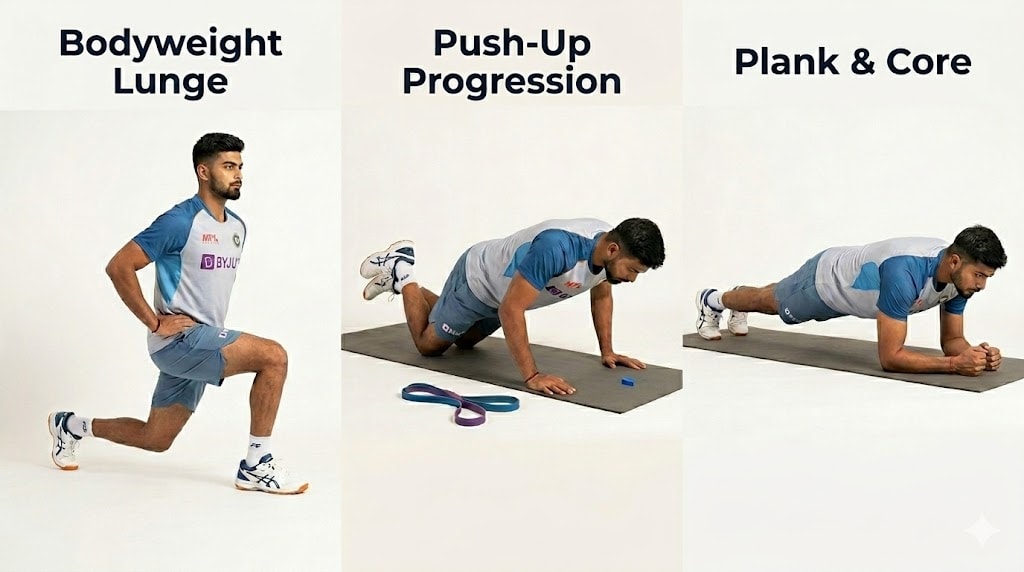
A simple exercise diagramSquats are very important for lower body strength. Strong legs help in running between wickets, jumping in the field, and maintaining balance while playing shots or bowling. Squats also improve stability, which is very important in cricket movements.
Planks help build core strength. A strong core improves balance and control. It helps batsmen maintain stability while playing shots and bowlers maintain posture during their action.
Lunges are also very useful because they improve balance, coordination, and leg power which is essential for quick movement on the field.
Progressing to Resistance Training
As beginners improve, they can slowly include light weights. Dumbbells can be used for exercises like shoulder press, bicep curls, and deadlifts. These exercises increase overall power and improve performance on the field.
However, it is important not to rush into heavy training. Many beginners make the mistake of lifting too much weight too early, which leads to injuries. The focus should always be on proper form and consistency.
Resistance bands are also a great option for beginners because they provide controlled resistance and reduce injury risk.
Developing Speed for Quick Movement
Speed is one of the most important skills in cricket. It is not just about running fast in a straight line but also about reaction time, agility, and explosive movement.
Running between wickets is a key part of batting. A fast runner can convert singles into doubles and put pressure on the fielding team. Similarly, in fielding, speed helps players stop boundaries and take catches.
Speed also plays a big role in bowling run-up consistency and energy control.
Sprint Training for Explosive Speed
To improve speed, sprint training is very effective. Beginners should practice short sprints of 20 to 40 meters. These sprints should be done at full intensity followed by proper rest. This helps develop explosive acceleration.
Another effective method is “hill sprints” where running uphill increases leg power and speed naturally.
Agility and Footwork Drills
Agility drills are also very useful. Cone drills help improve direction change, while ladder drills improve foot speed and coordination. These exercises are very important for fielders who need to react quickly.
Shadow fielding is also a great practice where players simulate real match movements without the ball to improve reflexes.
Reaction Time Training
Reaction training is another important method. A simple drill is having someone throw a ball randomly and reacting quickly to catch or stop it. This improves reflexes and sharpens awareness on the field.
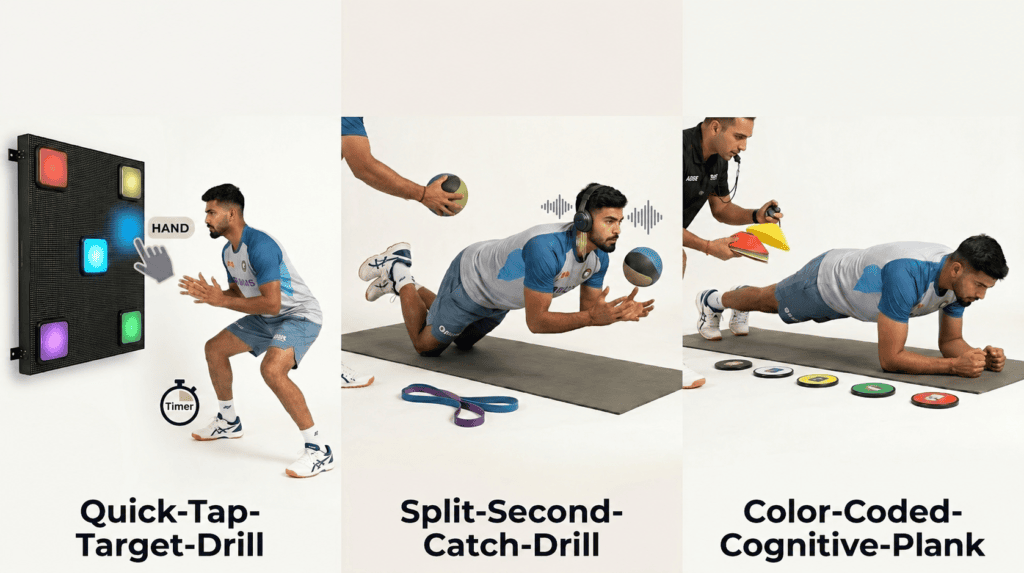
Reaction time training exerciseUsing tennis balls instead of cricket balls can also improve reaction speed because they move faster and unpredictably.
Improving Endurance for Long Matches
Endurance is the ability to maintain energy over a long period of time. Cricket matches can be long and physically demanding, so endurance is extremely important for every player.
Without endurance, a player gets tired quickly, which affects both physical and mental performance. Fatigue leads to poor decision making, slow movements, and lack of concentration.
Jogging and Aerobic Training
Jogging is one of the simplest and most effective ways to build endurance. Running for 15 to 30 minutes daily helps improve stamina and strengthens the heart and lungs.
Long-distance slow running helps build aerobic base which is essential for long cricket sessions.
Interval Training for Match Conditions
Interval training is even more effective. This involves alternating between fast running and slow walking. For example, sprinting for 30 seconds and walking for 30 seconds repeatedly helps simulate match conditions.
This type of training helps players recover faster between overs and fielding bursts.
Skipping Rope and Cardio Workouts
Skipping rope is another excellent endurance exercise. It improves cardiovascular fitness, coordination, and leg strength at the same time. Many professional cricketers include skipping in their daily warm-up routine.

Skipping rope and Cardio sample imageCycling and swimming are also great options. They improve stamina without putting too much pressure on joints, making them ideal for beginners.
Flexibility and Injury Prevention
Flexibility is often ignored by beginners, but it is a very important part of cricket fitness. Flexible muscles reduce the risk of injuries and improve movement efficiency.
Stretching before and after training helps keep the body flexible. Dynamic stretches such as arm circles, leg swings, and torso rotations prepare the body for activity. Static stretching after workouts helps muscles relax and recover.
Yoga can also be included for improving flexibility and balance.
Role of Nutrition in Cricket Fitness
Fitness is not only about exercise. Nutrition plays a very important role in building a strong and energetic body. Without proper diet, the body cannot recover or perform well.
Protein is essential for muscle repair and growth. Foods like eggs, chicken, fish, lentils, and milk should be part of a daily diet.

Carbohydrates provide energy for training and matches. Foods like rice, bread, oats, and fruits give the body fuel to perform.
Healthy fats are also important for overall health. Nuts, seeds, and oils help maintain energy levels.
Hydration is equally important. Drinking enough water keeps the body fresh and prevents dehydration during long practice sessions.
Electrolytes are also important for maintaining energy during hot weather matches.
Importance of Rest and Recovery
Rest is a very important part of fitness that many beginners ignore. Muscles grow and recover during rest, not during exercise.
Getting 7 to 9 hours of sleep every night helps the body recover and improves mental focus.
Rest days allow muscles to rebuild stronger. Without rest, performance decreases and injury risk increases.
Massage and foam rolling can also help reduce muscle soreness and improve recovery speed.
Mental Fitness in Cricket
Cricket is not only a physical game but also a mental game. A player must stay focused, calm, and confident under pressure.
Beginners can improve mental strength through visualization techniques. Imagining successful performance in matches helps build confidence.
Staying positive after mistakes is also very important. Every player makes mistakes, but strong players learn from them and move forward.
Breathing exercises can help control nerves during pressure situations.
Building a Simple Fitness Routine for Beginners
Beginners should not try to do too much at the start. A simple routine is more effective and easier to follow.
A basic routine can include push-ups, squats, planks, jogging, sprint drills, skipping rope, and stretching.
Training for 30 to 60 minutes a day is enough for beginners. The key is consistency, not intensity.
Weekly rest days should also be included.
As fitness improves, intensity and difficulty can be increased gradually. Tracking progress weekly helps maintain motivation and ensures continuous improvement.
Frequently Asked Questions (FAQs)
How Often Should Beginners Do Cricket Fitness Training?
Beginners should aim for 3 to 5 fitness sessions per week, focusing on strength, speed, endurance, and recovery.
Which Exercise Is Best for Improving Cricket Fitness?
There is no single best exercise, but squats, push-ups, planks, sprint drills, and skipping rope are highly effective for cricket players.
How Long Does It Take to Improve Cricket Fitness?
Most beginners start noticing improvements in strength, stamina, and speed within 4 to 8 weeks of consistent training.
Can Cricket Fitness Help Improve Batting and Bowling Performance?
Yes, better fitness improves power, balance, movement, endurance, and concentration, which can directly enhance batting and bowling performance.
Is Strength or Endurance More Important in Cricket?
Both are important. Strength helps with power and stability, while endurance allows players to maintain performance throughout long matches and training sessions.
Related Cricket Fitness Guides
To know about cricket basics, tips and fitness? Visit: JS Sports Hub Cricket Hub
Conclusion
Cricket fitness is the foundation of success in modern cricket. Strength, speed, and endurance are the three main pillars that every beginner must develop. Along with this, flexibility, nutrition, rest, and mental strength also play important roles.
Beginners should start slowly, stay consistent, and focus on building a strong base. Fitness cannot be achieved in a few days, but with regular effort, improvement is guaranteed.
A fit cricketer performs better, stays injury-free, and gains confidence on the field. Whether you are playing for fun or aiming for professional cricket, fitness will always be your biggest advantage.