
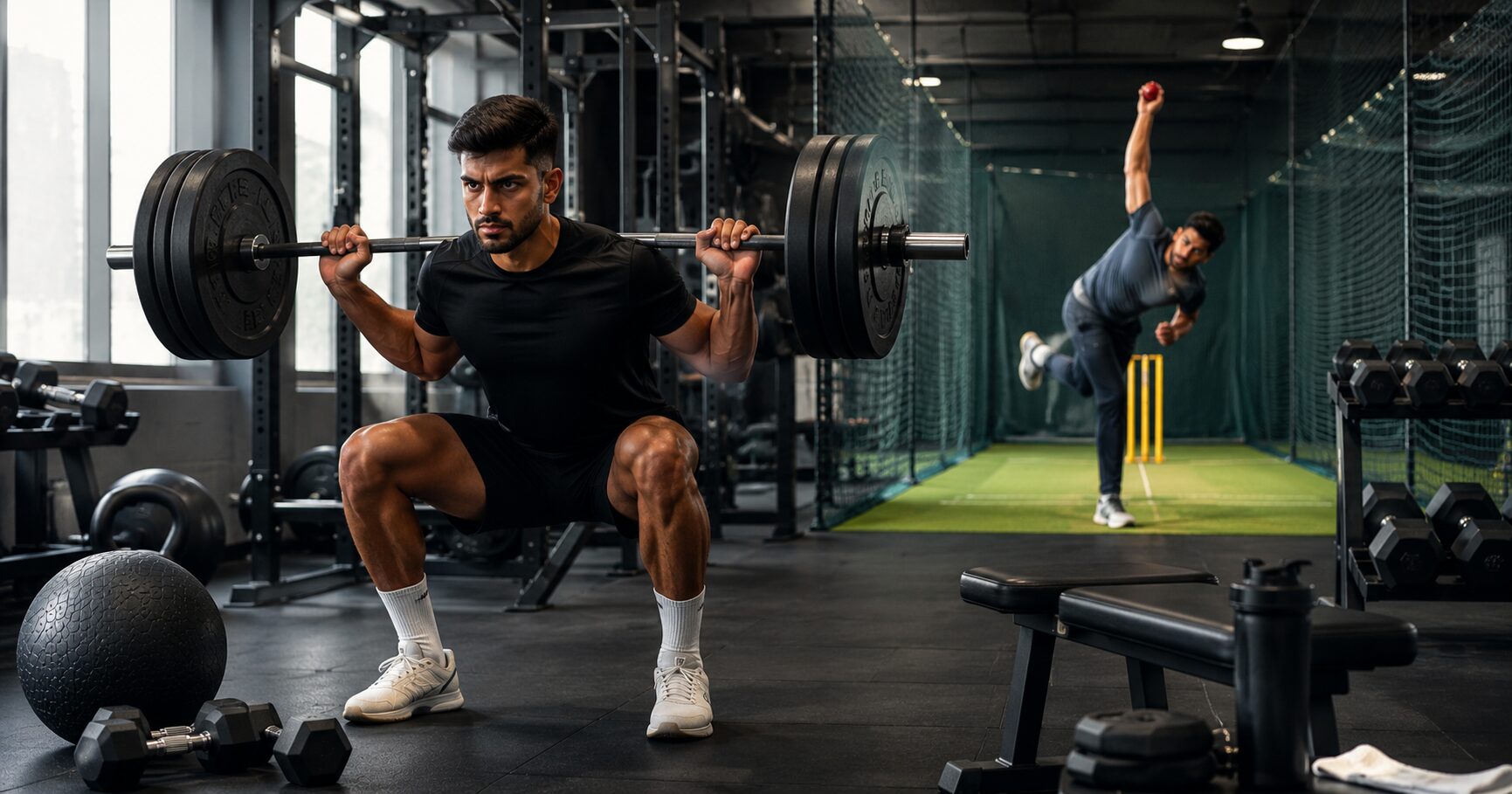

Fast bowling is one of the most physically demanding roles in cricket. A fast bowler must generate speed, maintain accuracy, sustain endurance, and minimise the risk of injury throughout long spells and demanding matches. While technical skills are essential, physical preparation plays an equally important role in a fast bowler’s success.
A well-structured Gym Workout for Fast Bowlers can significantly improve strength, power, speed, stability, and overall athletic performance. Modern fast bowlers rely heavily on strength and conditioning programmes to maximise their bowling potential and remain fit throughout the season.
This complete guide explores the most effective gym training methods, exercises, and strategies designed specifically for fast bowlers. Whether you are a beginner or an experienced cricketer, implementing these principles can help elevate your game to the next level.
Why Strength and Conditioning Matter for Fast Bowlers
Fast bowling places tremendous stress on the body. Every delivery involves explosive movements, high-impact landings, and rapid energy transfer from the legs through the core and into the bowling arm.
Without proper conditioning, bowlers may struggle with:
- Reduced bowling speed
- Poor endurance
- Increased injury risk
- Inconsistent performance
- Lower recovery capacity
A structured Gym Workout for Fast Bowlers helps develop the physical qualities needed to perform consistently at a high level while reducing the likelihood of common bowling injuries.
Key Physical Attributes Every Fast Bowler Needs
Before creating a training programme, it is important to understand the primary physical qualities required for fast bowling.
Strength
Strength forms the foundation of athletic performance. Strong muscles enable bowlers to generate greater force and withstand the physical demands of bowling.
Power
Power combines strength and speed. Fast bowlers need explosive power to accelerate through their delivery stride and generate maximum pace.
Speed
Improved sprinting speed often translates into a more powerful run-up and greater momentum at the crease.
Mobility
Good mobility allows bowlers to move efficiently through their bowling action while reducing stress on joints and muscles.
Endurance
Fast bowlers must maintain performance levels over multiple overs, sessions, and matches.
Developing these qualities should be the primary goal of any Fast Bowler Strength and Conditioning Workout Plan.
Benefits of a Gym Workout for Fast Bowlers
A dedicated gym programme offers several advantages.
Increased Bowling Speed
Greater lower-body strength and explosive power can contribute directly to increased bowling pace.
Improved Injury Prevention
Strengthening muscles, tendons, and ligaments helps protect the body against common cricket injuries.
Enhanced Athletic Performance
Better conditioning improves movement efficiency, balance, and coordination.
Faster Recovery
Well-conditioned athletes recover more quickly between training sessions and matches.
These benefits make strength training an essential component of modern fast bowling development.
Lower Body Strength Training
The legs are the primary force generators in fast bowling. Building lower-body strength should be a major priority.
Squats
Squats develop strength in the quadriceps, glutes, hamstrings, and core.
Benefits include:
- Improved power generation
- Greater stability
- Enhanced athletic performance
Perform three to four sets of six to eight repetitions using challenging weights.
Deadlifts
Deadlifts are among the most effective Strength Training Exercises for Fast Bowlers.
Benefits include:
- Stronger posterior chain
- Improved force production
- Better injury resistance
Focus on proper technique to maximise benefits and reduce injury risk.
Lunges
Lunges improve single-leg strength, balance, and coordination.
As fast bowling involves unilateral movement patterns, lunges are highly relevant for cricket performance.
Step-Ups
Step-ups help develop leg drive and explosive power while improving lower-body stability.
Developing Explosive Power
Strength alone is not enough. Fast bowlers must convert strength into explosive movement.
Box Jumps
Box jumps improve lower-body power and neuromuscular efficiency.
Perform explosive repetitions while maintaining proper landing mechanics.
Broad Jumps
Broad jumps help increase horizontal force production, which is valuable during the run-up and delivery stride.
Medicine Ball Throws
Medicine ball exercises mimic the explosive rotational movements involved in fast bowling.
These exercises develop power through the hips, core, and upper body.
Jump Squats
Jump squats combine strength and speed to improve explosive performance.
Incorporating power training into the Best Gym Workout for Fast Bowlers in Cricket can significantly enhance bowling effectiveness.
Core Training for Fast Bowlers
The core acts as the bridge between the lower and upper body.
A strong core improves force transfer, stability, and control throughout the bowling action.
Planks
Planks develop core endurance and spinal stability.
Side Planks
Side planks strengthen the obliques, which play a vital role in rotational movements.
Russian Twists
Russian twists improve rotational strength and control.
Pallof Press
This exercise enhances anti-rotational stability and helps protect the lower back.
Core training should be included in every Fast Bowler Strength and Conditioning Workout Plan.
Upper Body Strength Development
Although lower-body power drives bowling speed, upper-body strength remains important.
Pull-Ups
Pull-ups strengthen the back, shoulders, and arms.
They also improve posture and shoulder stability.
Bench Press
Bench pressing develops upper-body strength and pushing power.
Moderate volume is usually sufficient for fast bowlers.
Dumbbell Rows
Rows strengthen the upper back and help maintain shoulder health.
Overhead Press
This exercise improves shoulder strength and stability.
Strong shoulders are essential for maintaining bowling performance throughout long spells.
Mobility and Flexibility Training
Many bowlers focus solely on strength and neglect mobility work.
This can limit performance and increase injury risk.
Hip Mobility Exercises
Improved hip mobility supports a more efficient bowling action.
Thoracic Spine Mobility
A mobile upper back allows better rotation and force generation.
Dynamic Stretching
Dynamic warm-up exercises prepare the body for training and competition.
Foam Rolling
Foam rolling helps reduce muscle tightness and improve recovery.
Mobility training should be performed regularly alongside strength sessions.
How to Increase Bowling Speed Through Gym Training
One of the most common questions among aspiring fast bowlers is How to Increase Bowling Speed Through Gym Training.
The answer lies in combining multiple training components.
Build Lower-Body Strength
Stronger legs create greater force during the run-up and delivery stride.
Improve Explosive Power
Plyometric exercises teach the body to apply force rapidly.
Strengthen the Core
A powerful core improves energy transfer throughout the bowling action.
Enhance Sprint Performance
Short sprint drills can improve acceleration and momentum.
Maintain Proper Recovery
Adequate sleep, nutrition, and recovery are essential for performance improvements.
When combined effectively, these elements can contribute to measurable increases in bowling pace.
Sample Weekly Fast Bowler Strength and Conditioning Workout Plan
Monday – Lower Body Strength
- Squats
- Deadlifts
- Lunges
- Core exercises
Tuesday – Mobility and Recovery
- Dynamic stretching
- Foam rolling
- Light cardio
Wednesday – Power Development
- Box jumps
- Broad jumps
- Medicine ball throws
- Sprint drills
Thursday – Upper Body Strength
- Pull-ups
- Bench press
- Rows
- Shoulder stability exercises
Friday – Full Body Conditioning
- Circuit training
- Core work
- Agility drills
Saturday – Cricket Skills Session
- Bowling practice
- Fielding drills
- Match simulation
Sunday – Rest and Recovery
Allow the body time to recover and adapt.
This structure provides a balanced approach to fitness and performance development.
Common Mistakes Fast Bowlers Make in the Gym
Training Too Heavy Too Often
Excessive heavy lifting can impair recovery and increase injury risk.
Ignoring Mobility
Limited mobility can negatively affect bowling mechanics.
Neglecting Recovery
Recovery is when adaptation occurs. Without proper rest, progress slows.
Overtraining the Upper Body
Many bowlers focus too heavily on chest and arm exercises while neglecting the lower body.
Poor Technique
Incorrect lifting technique increases injury risk and reduces training effectiveness.
Avoiding these mistakes can maximise the benefits of your training programme.
Frequently Asked Questions (FAQs)
What is the best Gym Workout for Fast Bowlers?
The best programme combines strength training, power development, mobility work, conditioning, and recovery. A balanced approach produces the best long-term results.
How many days per week should fast bowlers train in the gym?
Most fast bowlers benefit from three to five gym sessions per week, depending on age, experience, and competition schedule.
What are the most effective Strength Training Exercises for Fast Bowlers?
Squats, deadlifts, lunges, pull-ups, and medicine ball throws are among the most effective exercises for developing bowling performance.
How to Increase Bowling Speed Through Gym Training?
Focus on lower-body strength, explosive power, core development, sprint training, and proper recovery. These factors work together to improve bowling pace.
What is the Best Gym Workout for Fast Bowlers in Cricket?
A programme that includes strength, power, mobility, conditioning, and cricket-specific exercises provides the most comprehensive results.
Want a complete guide on fitness? Read: Cricket Fitness Tips for Beginners
To know about cricket basics, tips and fitness? Visit: JS Sports Hub Cricket Hub
Conclusion
A well-designed Gym Workout for Fast Bowlers is one of the most effective ways to improve bowling speed, athletic performance, and long-term durability. Modern cricket demands more than technical skill alone. Fast bowlers must possess the strength, power, mobility, and endurance needed to perform consistently under pressure.
By incorporating proven Strength Training Exercises for Fast Bowlers, following a structured Fast Bowler Strength and Conditioning Workout Plan, and understanding How to Increase Bowling Speed Through Gym Training, players can unlock their full potential. Consistent effort, smart programming, and proper recovery will help fast bowlers become stronger, faster, and more effective on the cricket field.