
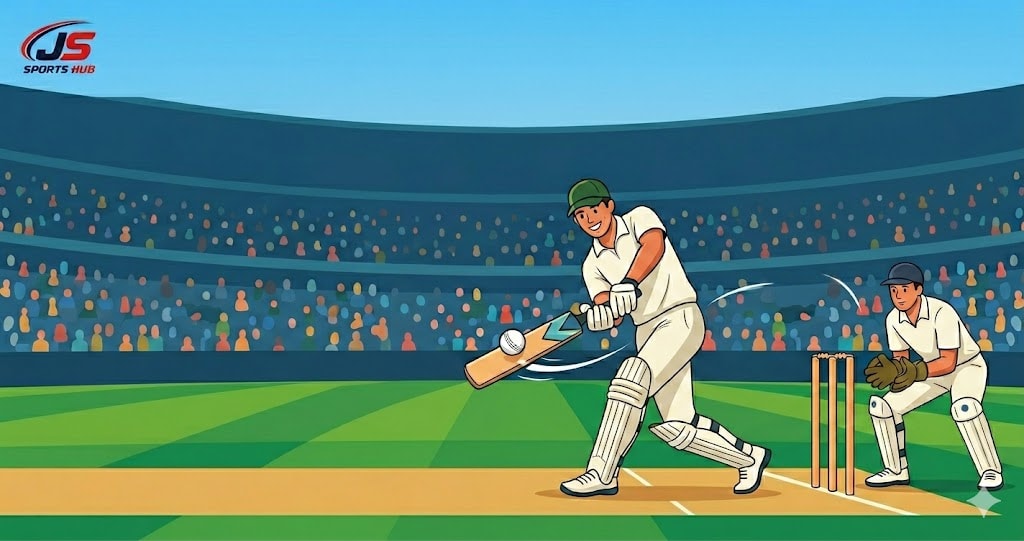

Cricket is one of the most famous sports in the world and is loved by millions of fans, especially in countries like Pakistan, India, Australia, England, and South Africa. If you are new to cricket, the game might look confusing because of its unique rules, field settings, and scoring system.
However, once you understand the basic rules, cricket becomes very interesting and easy to follow. This guide will explain cricket rules for beginners in a simple and detailed way so you can easily understand how the game works.
What is Cricket?
Cricket is a bat-and-ball game played between two teams. Each team has 11 players. One team bats and tries to score runs, while the other team bowls and fields to restrict runs and take wickets.
If you want to know more about cricket, you can read complete cricket guide .
The main goal of the game is:
👉 To score more runs than the opposing team.
The team with the higher score at the end wins the match.
Basic Formats of Cricket
Cricket is played in three main formats:
Test Cricket
- Played for up to 5 days
- Each team gets 2 innings
- No limit on overs
- Most traditional form of cricket
One Day International (ODI)
- Each team gets 50 overs
- Match finishes in one day
- Faster than Test cricket
T20 Cricket
- Each team gets 20 overs
- Very fast and entertaining format
- Most popular among beginners
Each format follows the same basic rules, but the number of overs changes.
What is an Over in Cricket?
An over is a set of 6 legal balls bowled by one bowler.
- 1 over = 6 deliveries
- 10 overs = 60 balls
- After each over, a new bowler bowls from the opposite end
If a bowler bowls a wide ball or no-ball, extra delivery is added.
Batting Rules in Cricket
Batting is when a player tries to score runs by hitting the ball.
Two batsmen are always on the field:
- Striker (faces the ball)
- Non-striker (waits at the other end)
How batsmen score runs:
- Running between wickets (1, 2, or 3 runs)
- Hitting the ball to the boundary (4 runs)
- Hitting the ball over the boundary without touching ground (6 runs)
The batsman’s main goal is to stay on the pitch and score maximum runs.
Ways a Batsman Can Get Out
A batsman can be dismissed in several ways. Here are the most common ones:
Bowled
When the ball hits the stumps and breaks them.
Caught
When a fielder catches the ball before it touches the ground.
LBW (Leg Before Wicket)
When the ball hits the batsman’s leg in front of the stumps and umpire decides it would have hit the wicket.
Run Out
When the batsman fails to reach the crease before the stumps are broken by a fielder.
Stumped
When the wicketkeeper removes the bails while the batsman is outside the crease.
Bowling Rules in Cricket
Bowling is when a player throws the ball towards the batsman.
The bowler’s main goal is:
- To take wickets
- To stop runs
Types of bowling:
- Fast bowling
- Spin bowling
Important bowling rules:
- Each over has 6 legal balls
- No-ball = illegal delivery + extra run
- Wide ball = too far from batsman + extra run
- Bowlers must not cross the bowling line
Fielding Rules in Cricket
Fielding is done by the bowling team to stop runs and take wickets.
Fielders:
- Catch the ball
- Stop boundaries
- Throw the ball quickly to wicketkeeper or bowler
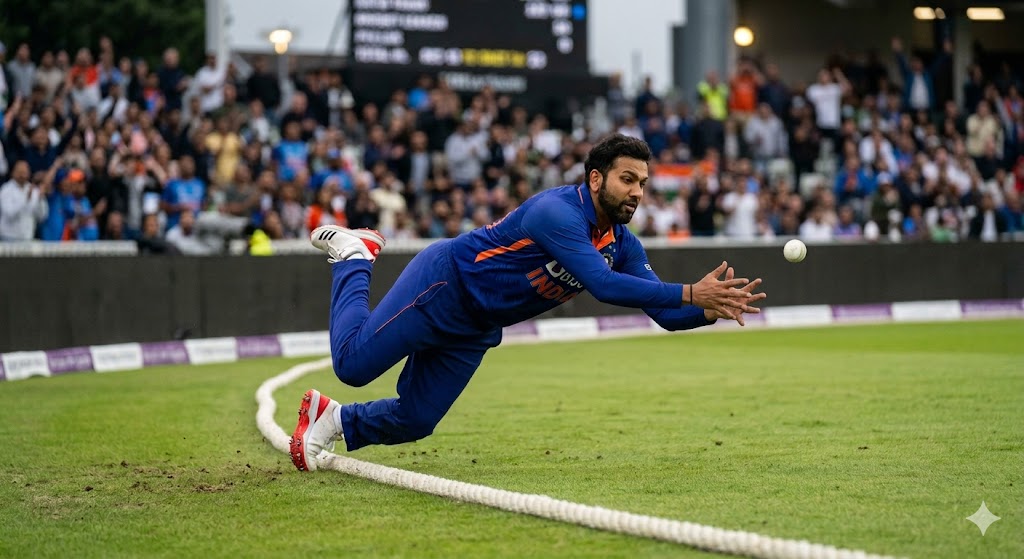
A fielder is taking a catch, but his foot touches the ground outside the boundary. In this situation, even if he catches the ball, it will not be considered an out and it will be counted as a six.Only one player is the wicketkeeper, standing behind the stumps.
The captain decides field positions based on strategy.
How Runs are Scored in Cricket
Runs are the most important part of cricket scoring.
Ways to score runs:
- Running between wickets = 1, 2, or 3 runs
- Boundary (4 runs) = ball touches ground then crosses rope
- Six (6 runs) = ball crosses boundary without touching ground
Extra runs:
- Wide ball = 1 extra run
- No-ball = 1 extra run + free hit in limited formats
What is a Wicket?
A wicket consists of:
- 3 stumps
- 2 bails
A batsman is out when the wicket is broken in different ways like bowled, run out, or stumped.
Toss in Cricket
Before every match, a coin toss is done between the two captains.
The winning captain chooses:
- Bat first OR bowl first

A toss is taking place between two captainsThis decision depends on:
- Pitch condition
- Weather
- Team strategy
Toss plays a very important role in match outcome.
Umpires and Decision System (DRS)
Umpires are officials who control the match. They make decisions like:
- Out or not out
- No-ball or wide
- Fair play rules
Modern cricket uses DRS (Decision Review System) where players can challenge umpire decisions using technology like:
- Ball tracking
- Snickometer
Powerplay in Cricket
In ODI and T20 matches, the first few overs are called Powerplay.
During powerplay:
- Fewer fielders are allowed outside circle
- Batting becomes easier
- Teams try to score fast runs
How to Win a Cricket Match
A team wins when:
- They score more runs than the opponent
- OR they bowl out the other team before reaching target
If both teams score equal runs, the match becomes:
- Tie
- Or Super Over (in T20/ODI formats)
Important Cricket Terms for Beginners
- Over = 6 balls
- Run = scoring unit
- Wicket = getting out
- Boundary = 4 or 6 runs
- Crease = safe batting zone
- Appeal = asking umpire for decision
Frequently Asked Questions (FAQs)
How Many Players Are There in a Cricket Team?
A standard cricket team consists of 11 players. One team bats while the other team bowls and fields.
How Many Balls Are in One Over?
One over consists of 6 legal deliveries bowled by the same bowler. After the over ends, another bowler bowls from the opposite end.
What Is the Difference Between a Four and a Six?
A four is scored when the ball reaches the boundary after touching the ground. A six is scored when the ball crosses the boundary without touching the ground.
What Happens If a Match Ends in a Tie?
If both teams score the same number of runs, the match is called a tie. In some limited-overs matches, a Super Over may be used to determine the winner.
Which Cricket Format Is Best for Beginners?
T20 cricket is usually the best format for beginners because it is shorter, faster, and easier to understand than Test cricket or ODIs.
Want a complete guide on cricket basics? Read: Cricket Rules, Players and Formats
To know about cricket basics, tips and fitness? Visit: JS Sports Hub Cricket Hub
Conclusion
Cricket is a fun and exciting game once you understand its basic rules. At first, it may seem complicated, but learning about overs, runs, wickets, and dismissals makes it very easy to follow.
This guide on cricket rules for beginners is designed to help you understand the game step by step. Whether you watch T20, ODI, or Test matches, knowing these rules will make your cricket experience much more enjoyable.