


Cricket is one of the most popular sports in the world. Millions of people watch and play cricket every day, especially in countries like Pakistan, India, Australia, England, New Zealand, South Africa, and Bangladesh. For many people, cricket is more than just a game. It is a passion, a tradition, and a big part of culture.
If you are a complete beginner and want to know what is cricket, it may look confusing at first. You may hear terms like overs, wickets, LBW, no balls, powerplay, or strike rate and feel lost. The good news is that cricket becomes much easier once you understand the basic structure of the game.
This complete beginner guide will explain cricket in simple English. You will learn:
- what cricket is
- how teams play
- how runs are scored
- what overs mean
- different cricket formats
- basic cricket rules
- common cricket terms
By the end of this guide, you will have a strong understanding of cricket and will be able to enjoy watching matches more confidently.
Table of Contents
What is Cricket?
Cricket is a bat-and-ball sport played between two teams. Each team has 11 players. One team bats to score runs, while the other team bowls and fields to stop runs and take wickets.
The team that scores more runs wins the match.
Cricket is played on a large oval or circular field. In the center of the field is a rectangular pitch where most of the action happens. At both ends of the pitch are wickets made of three wooden stumps and two small bails.
The game may look slow sometimes, but cricket actually involves strategy, teamwork, patience, skill, and smart decision-making. Every ball can change the match.
Cricket is enjoyed by people of all ages because it combines excitement, planning, and emotion.
How Many Players Are in a Cricket Team?
A cricket team has 11 players. Every player has a different role in helping the team win.
Batsmen/batters
Batsmen try to score runs using the bat. Some batsmen are aggressive hitters, while others focus more on staying at the crease for a long time.
Bowlers
Bowlers throw the ball toward the batsman and try to get them out. Bowlers can be fast bowlers or spin bowlers.
All-Rounders
All-rounders are players who can both bat and bowl effectively. These players are very valuable because they help in multiple areas of the game.
Wicket Keeper
The wicket keeper stands behind the stumps and catches the ball. The wicket keeper also helps in stumpings and run-outs.
A balanced team usually includes:
- specialist batsmen
- fast bowlers
- spin bowlers
- all-rounders
- one wicket keeper
Because cricket is a team sport, every player’s contribution matters.
If you want to know more about cricket team players, you can read cricket players and their roles.
Cricket Ground and Pitch
A cricket match follows a simple process.
Cricket is played on a large ground. In the center of the field is the cricket pitch.
The pitch is:
flat and hard
the main area where batting and bowling happen
At both ends of the pitch are wickets.
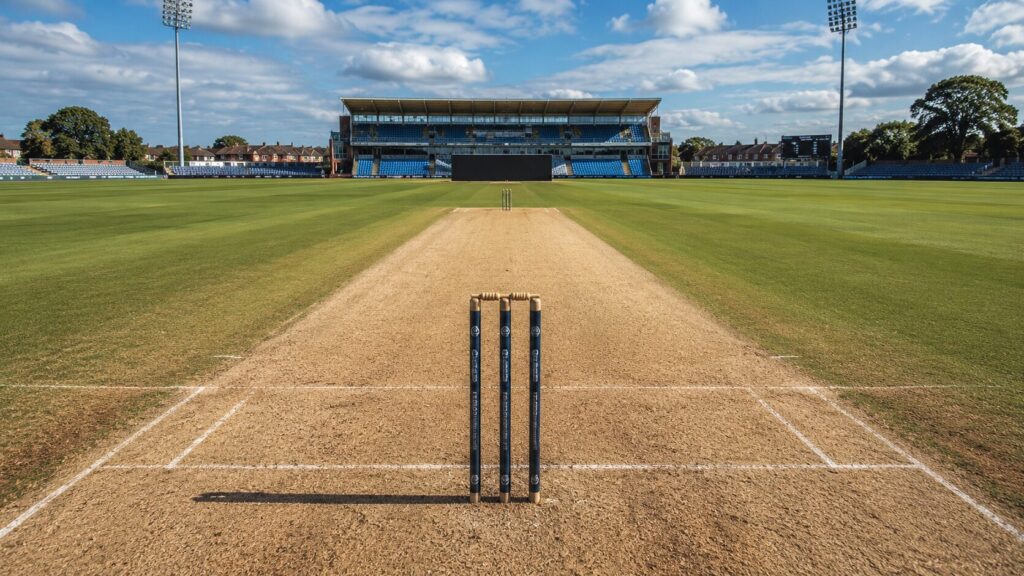
The condition of the pitch affects the game a lot:
dry pitches may help spin bowlers
green pitches help fast bowlers
flat pitches are usually good for batting
The size of cricket grounds can also vary. Some stadiums have short boundaries while others are much bigger.
Basic Flow of a Cricket Match
A cricket match follows a simple process.
1. Toss
Before the match starts, the captains toss a coin. The winning captain chooses whether to bat or bowl first.
2. First Innings
One team starts batting and tries to score as many runs as possible.
3. Bowling and Fielding
The other team bowls and fields to stop runs and take wickets
4. Change of Innings
After the first team finishes batting, the teams switch roles.
5. Chase
The second team tries to chase the target score.
6. Match Result
The team with more runs wins the match.
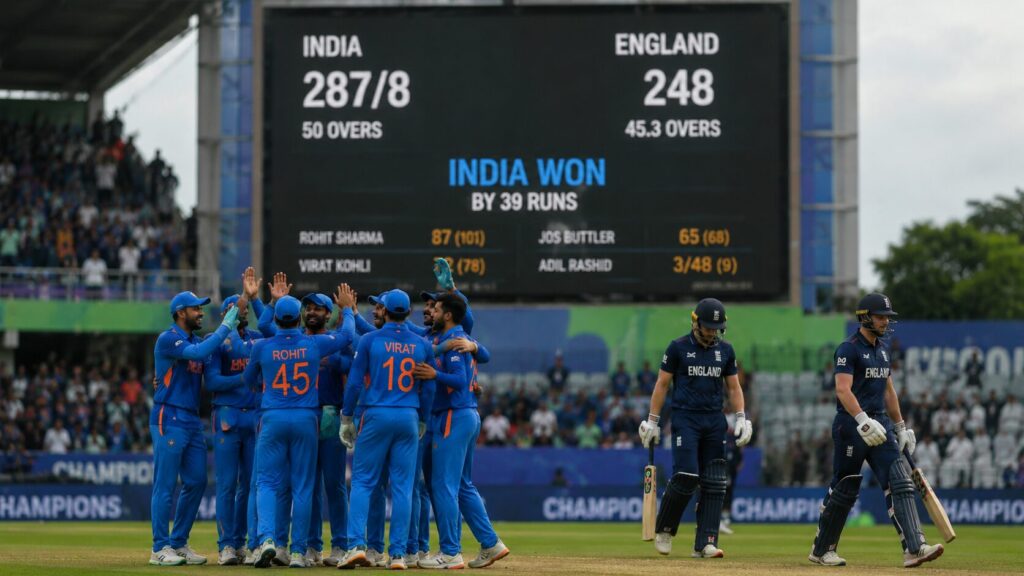
This simple structure is followed in all major cricket formats.
What is an Over in Cricket?
An over is one of the most important concepts in cricket.
One over = 6 legal balls.
A bowler bowls six balls from one end of the pitch. After six deliveries, another bowler bowls from the opposite end.
- Overs are important because they:
- organize the match
- control match length
- affect batting strategy
- affect bowling strategy
Different formats have different numbers of overs:
T20 = 20 overs per team
ODI = 50 overs per team
Test cricket = unlimited overs
In shorter formats, teams try to score quickly because they have limited overs available.
If you want to know more about cricket over and run rate, you can read cricket over and run rate explanation.
Basic Cricket Rules
Cricket has many rules, but beginners should first focus on the most important ones.
Basic cricket rules include:
each team has 11 players
one team bats while the other bowls
runs are scored by hitting the ball
bowlers try to take wickets
batting team tries to score more runs
the team with the highest score wins
The match is controlled by umpires who make decisions during the game.
Cricket also has rules related to:
no balls
wide balls
field restrictions
player behavior
time limits
Understanding these basics makes cricket much easier to follow.
Ways a Batsman Can Get Out
There are several ways a batsman can get out in cricket.
Bowled
The ball hits the stumps and removes the bails.
Caught
A fielder catches the ball before it touches the ground.
Run Out
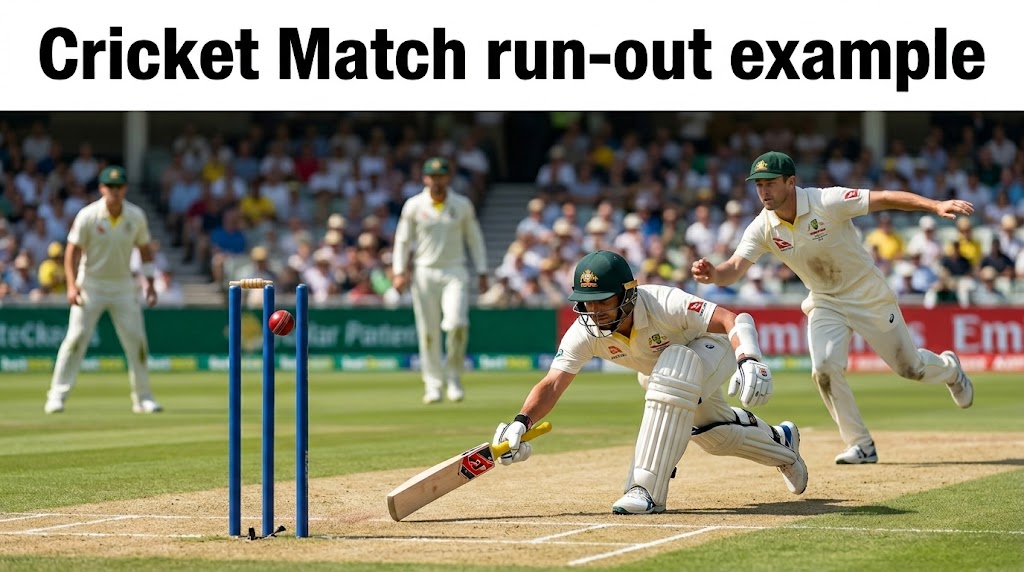
A batsman fails to reach the crease before the stumps are broken.
LBW
The batsman blocks the ball with the leg instead of the bat.
Stumped
The wicket keeper removes the bails while the batsman is outside the crease.
Hit Wicket
The batsman accidentally hits the stumps with the bat or body.
Taking wickets is one of the main goals for the bowling team.
What is LBW in Cricket?
LBW stands for Leg Before Wicket.
This is one of the most discussed rules in cricket.
A batsman can be given LBW if:
the ball hits the leg
the umpire believes the ball would hit the stumps
certain conditions are met
The purpose of the LBW rule is to stop batsmen from unfairly blocking the ball with their body.
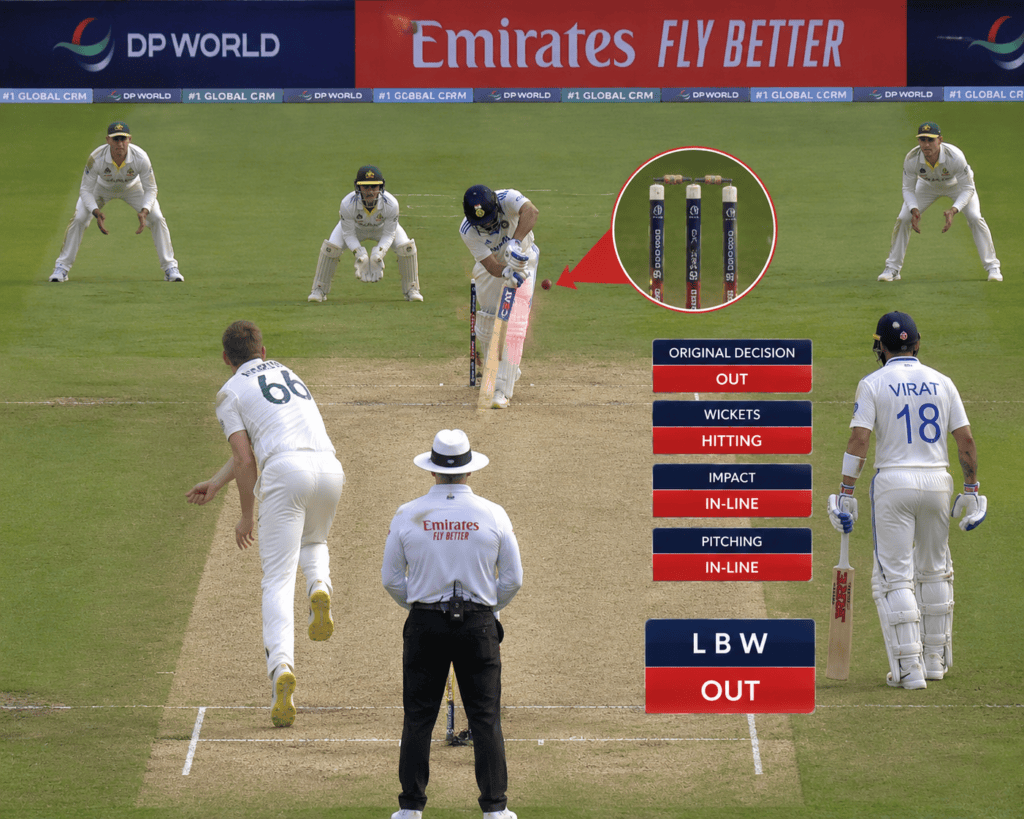
A batter is getting LBW out.Modern cricket uses DRS (Decision Review System) technology to help review LBW decisions.
Although LBW can look confusing at first, beginners understand it better after watching more matches.
LBW happens when:
- A bowler delivers the ball toward the stumps.
- The batsman misses the shot.
- The ball hits the batsman’s pad.
- If the pad was not there, the ball would hit the stumps.
In this case, the batsman can be given LBW out.
Outside Leg Stump Rule
If the ball pitches or hits the batsman outside the leg stump, the batsman is usually not out.
This is one of the most important LBW rules.
Role of DRS in LBW
Modern cricket uses DRS (Decision Review System) to review LBW decisions.
Technology checks:
- ball tracking,
- impact point
- and whether the ball would hit the stumps.
Short Definition
LBW (Leg Before Wicket) is a method of dismissal in cricket where the batsman is out if their leg or body stops the ball from hitting the stumps.
What is No Ball and Wide Ball?
No Ball
A no ball happens when the bowler breaks a rule.
Common examples:
overstepping the line
dangerous bowling
illegal bowling action
The batting team receives:
one extra run
another delivery
In some formats, the next ball becomes a free hit.
Wide Ball
A wide ball is bowled too far from the batsman.
If the umpire believes the batsman could not reasonably play the ball, it is called wide.
The batting team receives:
one extra run
another ball
No balls and wides help increase the batting team’s score.
How Scoring Works in Cricket
Runs are the scoring system in cricket.
Teams can score runs in different ways.
Running Between Wickets
Batsmen run between wickets to score 1, 2, or 3 runs
Boundary Four
If the ball reaches the boundary after touching the ground, the batting team gets four runs.
Six
If the ball crosses the boundary without touching the ground, it is six runs.
Extras
Additional runs can come from:
wides
no balls
byes
leg byes
Batting teams try to score quickly while also protecting wickets.
Cricket Formats Explained
Cricket is played in three major formats.
T20 Cricket
T20 is the shortest international format.
Features:
20 overs per team
fast-paced matches
aggressive batting
entertainment-focused
T20 cricket is extremely popular because matches finish within a few hours.
Leagues like IPL and PSL helped make T20 cricket famous worldwide.
ODI Cricket
ODI means One Day International.
Features:
50 overs per team
balanced gameplay
combination of patience and attacking cricket
The ICC Cricket World Cup is played in ODI format
ODIs are longer than T20 matches but shorter than Test matches.
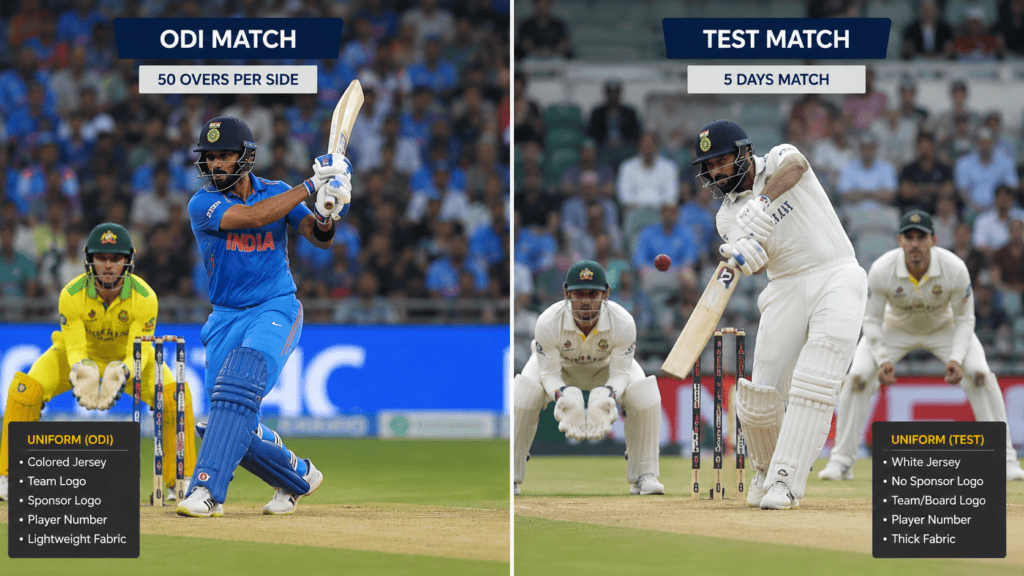
Difference between ODI and Test cricket matchTest Cricket
Test cricket is the oldest format.
Features:
played over 5 days
no over limit
focus on patience and strategy
Many cricket fans believe Test cricket is the purest form of the sport because it tests every skill of a player.
What is Duckworth Lewis Method?
Rain sometimes interrupts cricket matches. In limited-over games, the Duckworth Lewis Method (DLS) is used to calculate fair targets.
The system considers:
overs remaining
wickets lost
current score
The purpose is to give both teams equal and fair chances.
DLS may look complicated, but its main purpose is fairness.
Importance of DLS in Cricket
The DLS method, also known as the Duckworth-Lewis-Stern method, is very important in modern cricket because it helps decide fair results in rain-affected matches. In limited-overs cricket, such as One Day Internationals and T20 matches, rain can interrupt the game and reduce the number of overs. Without a proper system, it would be difficult to determine a fair target for the team batting second.
The DLS method solves this problem by calculating targets based on the resources available to both teams. These resources mainly include the number of overs remaining and wickets in hand. If a match is interrupted by rain, the system adjusts the target score so that both teams still have a fair chance to win.
DLS is important because it keeps matches competitive and prevents unfair advantages. It also helps tournaments continue smoothly even when weather conditions are poor. Today, almost all international cricket matches use the DLS method during rain interruptions.
Although the calculations can seem complicated to fans, the system is widely accepted as the most accurate and balanced way to handle shortened matches in cricket.
Cricket Field Positions
Fielders stand in different positions around the ground.
Some common positions include:
slip
point
cover
mid-off
mid-on
fine leg
square leg
Captains change field positions depending on:
batsman style
bowling type
match situation
Good field placement can stop runs and create wicket-taking opportunities.
Important Skills in Cricket
Cricket players need many skills to succeed.
Important skills include:
batting
bowling
catching
throwing
concentration
teamwork
fitness
Modern cricket players train very hard to improve these areas
Fitness has become especially important in modern cricket.
Why Cricket Is So Popular
Cricket is loved by millions because it creates excitement and emotion.
People enjoy cricket because of:
close matches
national rivalries
amazing players
big tournaments
emotional moments
Famous tournaments include:
ICC Cricket World Cup
T20 World Cup
IPL
PSL
The Ashes
Cricket also connects people from different countries and cultures.
Tips for Beginners
If you are starting cricket, these tips can help:
- Learn basic rules first
- Watch short match highlights
- Understand overs and scoring
- Learn player positions
- Watch T20 cricket to understand the game faster
- Follow one team regularly
The more cricket you watch, the easier the game becomes to understand.
Frequently Asked Questions (FAQs)
Is Cricket Easy to Learn for Beginners?
Yes, cricket is easy to learn when you start with the basic rules, scoring system, and player roles.
How Long Does a Cricket Match Last?
The duration depends on the format. T20 matches last about 3 hours, while Test matches can last up to 5 days.
Why Does a Cricket Team Have 11 Players?
A cricket team consists of 11 players to balance batting, bowling, and fielding responsibilities.
What Is the Difference Between a No Ball and a Wide Ball?
A no ball is an illegal delivery by the bowler, while a wide ball is delivered too far from the batsman to play a normal shot.
Can a Batsman Be Out on a No Ball?
In most cases, a batsman cannot be dismissed by bowled, caught, or LBW on a no ball.
Which Cricket Format Is Best for Beginners?
T20 cricket is often considered the easiest format for beginners because it is shorter and faster-paced.
Why Are Field Positions Important in Cricket?
Field positions help teams prevent runs and create opportunities to dismiss batsmen.
What Is the Most Important Skill in Cricket?
There is no single most important skill, but good batting, bowling, fielding, and fitness all contribute to success.
Related Cricket Guides
- Over and Run Rate in Cricket
- Cricket Rules Explained
- How Many Players Are in a Cricket
- Cricket Field Positions
To know about cricket basics, tips and fitness? Visit: JS Sports Hub Cricket Hub
Conclusion
Cricket is one of the most exciting and skillful sports in the world. Although it may seem confusing at first, the game becomes much easier when you understand the basics like players, overs, scoring, wickets, and formats.
Whether you enjoy fast T20 matches, balanced ODI games, or traditional Test cricket, cricket offers something for every sports fan.
This guide gave you a strong beginner foundation. From here, you can continue learning more advanced cricket topics such as field positions, batting techniques, bowling styles, match strategies, and player roles.
If you continue watching matches and learning regularly, you will quickly become comfortable with cricket and enjoy the sport much more.
Informative article 👏🏻👏🏻👌🏻👌🏻
Thank you!