
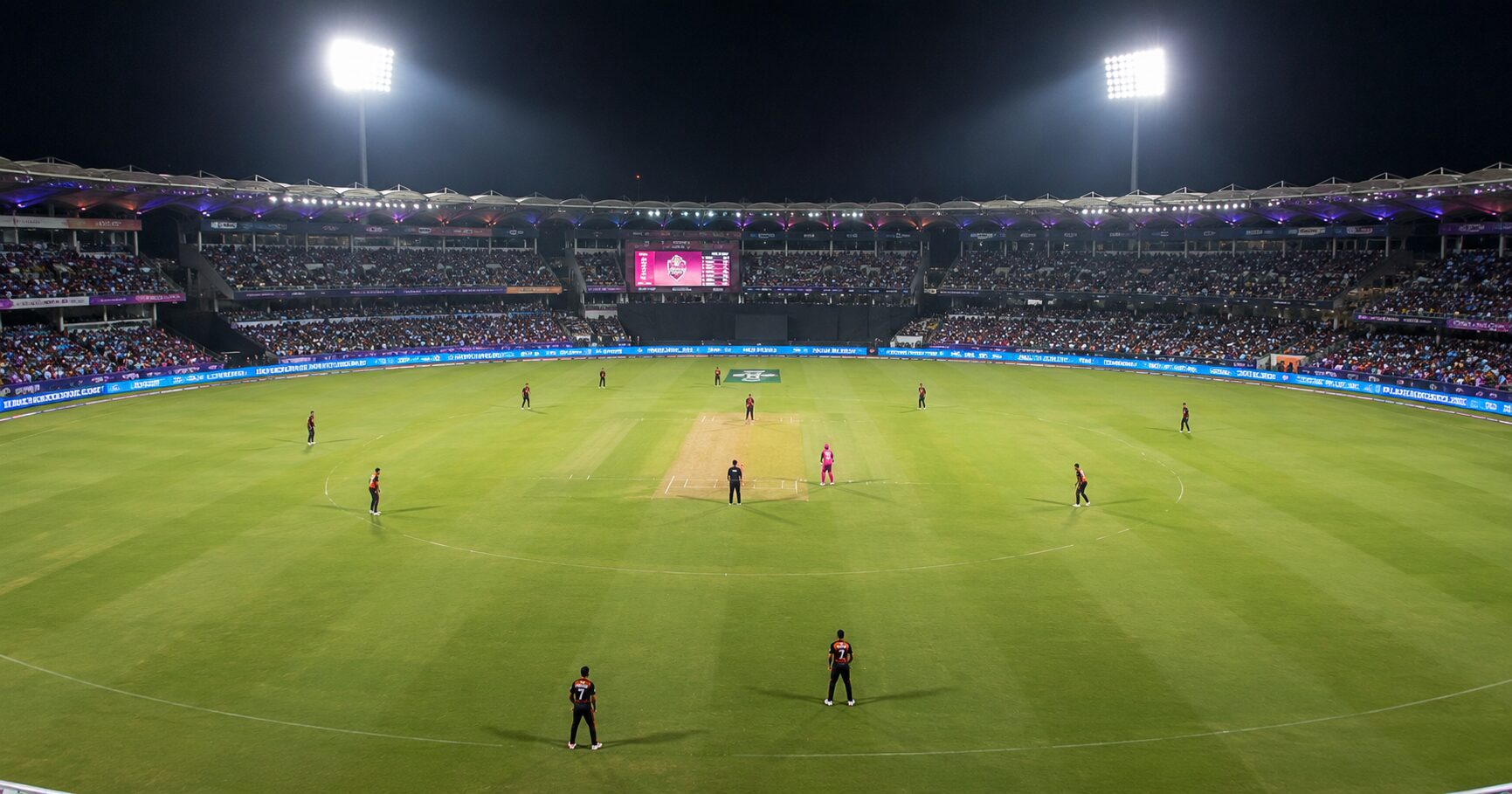

Cricket is one of the most popular sports in the world, enjoyed by millions of fans and players across different countries. While batting and bowling often receive the most attention, fielding plays an equally important role in determining the outcome of a match. Understanding Cricket Field Positions is essential for players, coaches, and fans who want to develop a deeper knowledge of the game.
Field positions are strategically placed areas on the cricket field where fielders stand to prevent runs, take catches, and support bowlers. Each position has a specific purpose and can change depending on the match situation, bowling style, and batting approach. Whether you are new to the game or looking to improve your understanding of Cricket Rules, learning field positions will help you appreciate the tactical side of cricket.
In this guide, we will explain the most common Cricket Field Positions, their roles, and how they contribute to a successful Cricket Team.
What Is Cricket?
Before exploring field positions, it is useful to understand the basics of the game.
Cricket is a bat-and-ball sport played between two teams, each consisting of eleven players. One team bats while the other bowls and fields. The batting side aims to score runs, while the fielding side attempts to dismiss batsmen and restrict scoring opportunities.
The game is governed by a set of Cricket Rules that define how matches are played, how runs are scored, and how players are dismissed. A strong understanding of fielding positions helps both players and spectators better understand match tactics and decision-making.
Why Are Cricket Field Positions Important?
Field positions are much more than simply assigning players to random locations around the ground. They are carefully selected based on multiple factors.
Supporting the Bowler
Field placements are designed to complement a bowler’s strategy. If a bowler is targeting a specific weakness, fielders are positioned to capitalise on potential mistakes.
Preventing Boundaries
Strategic fielding positions help reduce scoring opportunities and force batsmen into taking risks.
Creating Wicket-Taking Opportunities
Many field placements are intended to increase the chances of catches and run-outs.
Understanding Cricket Field Positions allows players to recognise how field settings influence the outcome of a match.
Understanding the Layout of a Cricket Field
The cricket field is generally divided into two sides based on the batsman’s stance.
Off Side
The off side refers to the area in front of the batsman when facing the bowler, on the side where the bat is usually directed for traditional strokes.
Leg Side
The leg side, also known as the on side, is the area behind the batsman’s body when standing in the batting stance.
Most field positions are categorised according to whether they are located on the off side or leg side.
Close Catching Cricket Field Positions
Close-catching positions are placed near the batsman to take advantage of edges and mistimed shots.
Slip
Slip fielders stand behind the batsman on the off side near the wicketkeeper. They are positioned to catch edges from fast bowlers.
First Slip, Second Slip and Third Slip
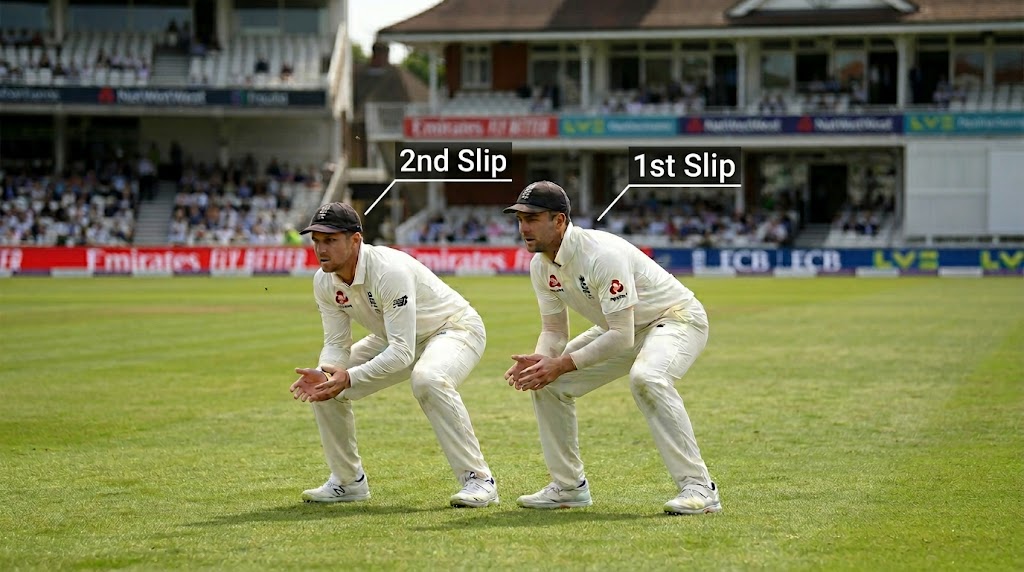
Multiple slip fielders may be used depending on conditions and the bowler’s effectiveness.
Gully
The gully stands slightly wider than the slips and catches edges that travel at an angle.
Silly Point
A very close fielding position on the off side, often used against spin bowlers.
Short Leg
Positioned close to the batsman on the leg side, short leg is commonly used to catch deflections from defensive shots.
These positions are among the most attacking Cricket Field Positions.
Off-Side Cricket Field Positions
The off side contains several important fielding positions.
Point
Point is positioned square of the wicket on the off side. This fielder stops cut shots and square drives.
Backward Point
Located slightly behind point, backward point is effective against late cuts and defensive strokes.
Cover
Cover is one of the most recognisable positions in cricket and is responsible for stopping cover drives.
Extra Cover
Positioned between cover and mid-off, extra cover covers attacking drives through the off side.
Mid-Off
Mid-off stands relatively close to the bowler and helps prevent straight drives.
These fielding positions are frequently used in both attacking and defensive field settings.
Leg-Side Cricket Field Positions
The leg side also features several key positions.
Square Leg
Square leg stands perpendicular to the batsman on the leg side and helps stop flicks and leg-side shots.
Backward Square Leg
Positioned slightly behind square leg, this fielder covers glances and deflections.
Mid-Wicket
Mid-wicket is one of the busiest fielding positions because many batsmen target this area for scoring.
Deep Mid-Wicket
Located near the boundary, deep mid-wicket prevents boundaries and catches lofted shots.
Mid-On
Mid-on mirrors mid-off but is positioned on the leg side.
These Cricket Field Positions are crucial for controlling scoring opportunities on the leg side.
Boundary Cricket Field Positions
Modern cricket often requires fielders near the boundary to prevent fours and sixes.
Third Man
Third man stands near the boundary behind the wicketkeeper on the off side.
Fine Leg
Fine leg is positioned behind square on the leg side and is particularly important against fast bowlers.
Deep Square Leg
This position helps stop powerful pull and hook shots.
Long-On
Long-on is located near the boundary directly behind mid-on.
Long-Off
Long-off mirrors long-on on the off side.
Boundary fielders play a major role in limited-overs cricket.
The Role of the Wicketkeeper
Although technically not considered a traditional fielding position, the wicketkeeper is one of the most important members of the fielding side.
Primary Responsibilities
The wicketkeeper catches deliveries, attempts stumpings, and assists in run-outs.
Communication and Leadership
The wicketkeeper often acts as an additional strategist, helping the captain adjust field placements during the game.
A skilled wicketkeeper strengthens the entire Cricket Team.
How Captains Choose Field Positions
Field placements vary depending on several factors.
Type of Bowler
Fast bowlers often use slips, gullies, and third man, while spin bowlers prefer short leg and silly point.
Match Format
Test cricket encourages attacking fields, while limited-overs cricket often requires more defensive boundary riders.
Batting Style
Field settings are adjusted based on whether a batsman prefers off-side strokes, leg-side shots, or aggressive play.
This strategic aspect makes Cricket Field Positions a fascinating part of the game.
Cricket Field Positions and Over and Run Rate in Cricket
Field placements directly influence Over and Run Rate in Cricket.
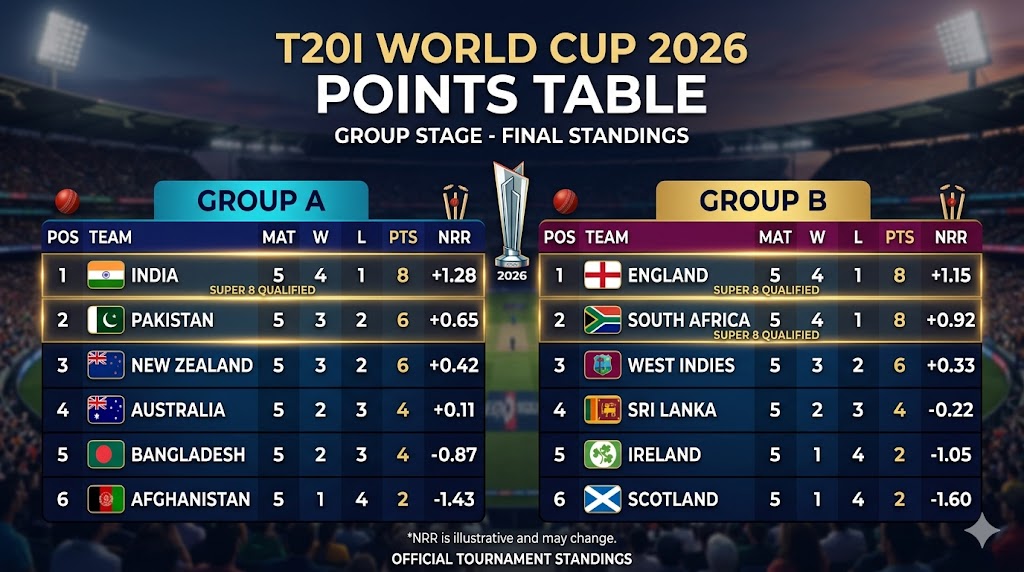
A defensive field with more boundary riders can reduce scoring opportunities and lower the run rate. Conversely, attacking field settings may create wicket-taking chances but allow additional runs.
Captains constantly balance aggression and defence to maintain control of the match. Effective field placements are often crucial in managing Over and Run Rate in Cricket, especially during pressure situations.
Common Mistakes When Learning Field Positions
Many beginners struggle to remember the names and locations of field positions.
Memorising Without Understanding
Rather than memorising positions, focus on understanding their purpose.
Ignoring Match Context
Field placements change depending on conditions and tactics.
Not Watching Professional Matches
Observing international cricket helps players learn how professionals use field settings effectively.
Learning through observation and practice makes understanding Cricket Field Positions much easier.
How Field Positions Improve Team Performance
Effective field placements contribute significantly to a team’s success.
Better Bowling Support
Well-positioned fielders create pressure and increase wicket-taking opportunities.
Reduced Scoring Opportunities
Strategic placements make it harder for batsmen to find gaps.
Improved Team Coordination
Understanding field positions helps every member of the Cricket Team perform their role efficiently.
Strong fielding strategies often separate winning teams from losing ones.
Frequently Asked Questions (FAQs)
What are Cricket Field Positions?
Cricket Field Positions are specific areas on the field where players are placed to support bowlers, prevent runs, and take wickets.
How many field positions are there in cricket?
There are numerous recognised field positions, including slip, gully, point, cover, mid-off, mid-on, square leg, fine leg, and many others.
Why do field positions change during a match?
Field positions change according to the bowler, batsman, match format, pitch conditions, and game situation.
Which field position is closest to the batsman?
Positions such as silly point and short leg are among the closest fielding positions to the batsman.
How do field positions affect Over and Run Rate in Cricket?
Field placements can either restrict scoring opportunities or create wicket-taking chances, directly influencing the run rate and match momentum.
Want a complete guide on cricket basics? Read: Cricket Rules, Players and Formats
To know about cricket basics, tips and fitness? Visit: JS Sports Hub Cricket Hub
Conclusion
Understanding Cricket Field Positions is essential for anyone who wants to deepen their knowledge of cricket. These positions form the foundation of fielding strategy and significantly influence match outcomes. From close-catching positions like slip and short leg to boundary roles such as third man and long-on, every position serves a unique purpose.
By learning how field placements support bowlers, restrict runs, and create wicket-taking opportunities, players can become more effective team members and fans can gain a greater appreciation for the tactical side of the sport. Whether you are exploring Cricket Rules, learning about Over and Run Rate in Cricket, or trying to understand the structure of a Cricket Team, mastering field positions is an important step towards a complete understanding of what is cricket.