
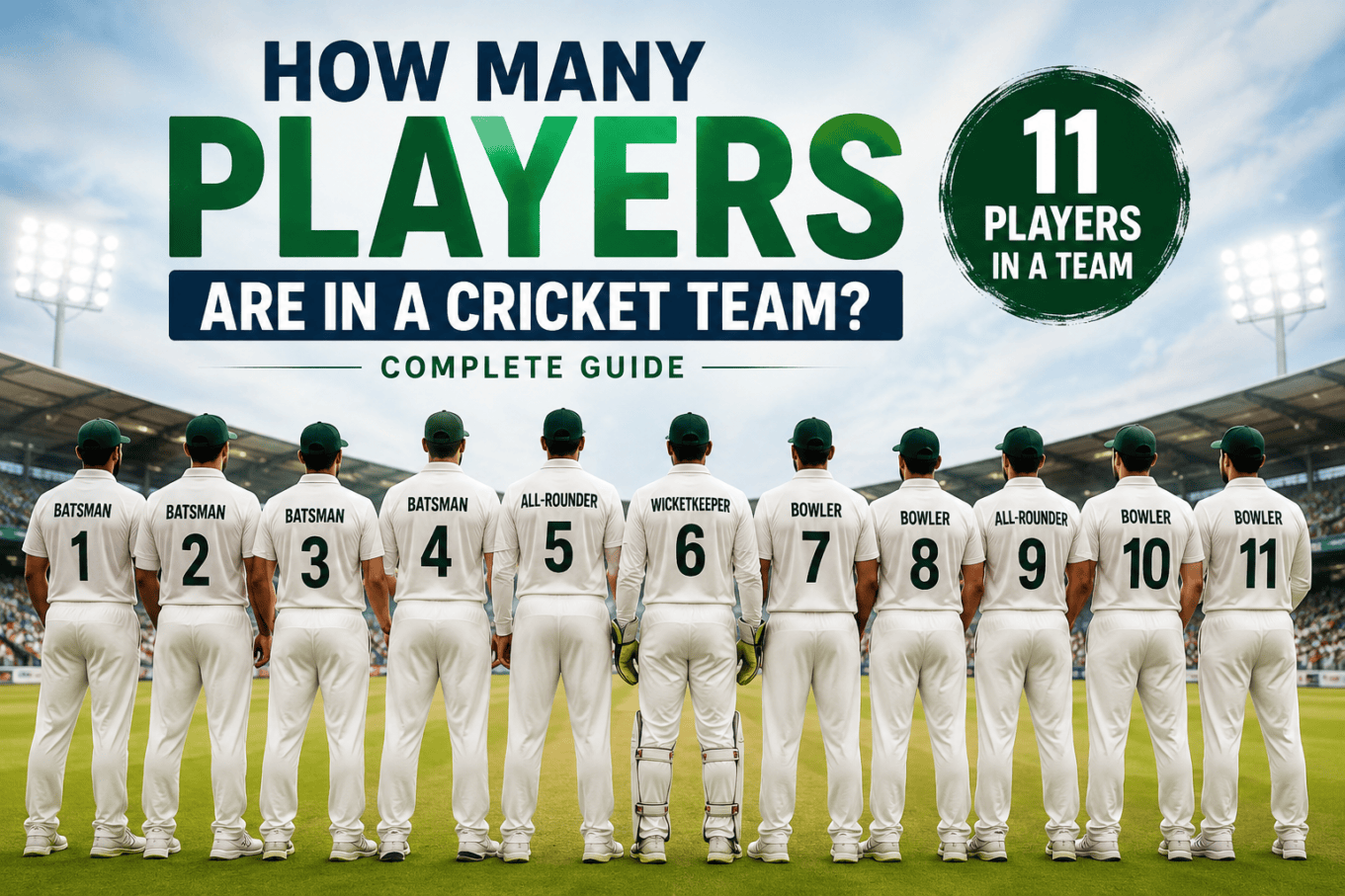

Cricket is one of the most popular sports in the world, especially in countries like Pakistan, India, Australia, and England. Millions of fans watch cricket regularly, but beginners often ask a simple question: How many players are there in a cricket team?
If you want to know more about cricket, you can read complete cricket guide .
The answer is simple: a standard cricket team consists of 11 players. These players work together in batting, bowling, and fielding to compete against the opposition. Understanding their roles helps you better understand how cricket actually works.
In this article, we will explain the number of players in a cricket team, their roles, substitutes, team structure, and other important details.
Standard Number of Players in a Cricket Team
In professional cricket, each team includes:
- 11 main playing members
- A few substitute or reserve players
A cricket match is played between two teams, so there are usually 22 players on the field in total (11 vs 11).
This rule is followed by the International Cricket Council (ICC) in all major formats:
- Test cricket
- One Day Internationals (ODIs)
- T20 Internationals
No matter the format, each team always fields 11 players. This consistency is what makes cricket structured and globally standardized.
Why Does a Cricket Team Have 11 Players?
The number 11 became standard during the early development of cricket in England. Over time, this number proved to be the most balanced for fair competition.
With 11 players:
- Teams can build a strong batting lineup
- Specialized bowlers can be included
- Field coverage becomes complete and strategic
- The game remains balanced between bat and ball
If there were fewer players, teams would struggle to manage bowling and fielding. If there were more, the field would become overcrowded and the game would lose its strategic balance.
This is why 11 players became the official and permanent structure of cricket.
Roles of Players in a Cricket Team
Each of the 11 players has a specific responsibility depending on their skill set.
Batters (previously known as batsmen)
Batsmen are responsible for scoring runs. A typical team includes:
- Opening batsmen
- Top-order batsmen
- Middle-order batsmen
- Finishing batsmen
Openers face the new ball and try to give a strong start. Middle-order batsmen stabilize the innings, while finishers accelerate scoring in the final overs.
Bowlers
Bowlers are responsible for taking wickets and controlling runs.
Types include:
- Fast bowlers
- Medium pacers
- Spin bowlers
Most teams include at least 4–5 bowling options to handle different pitch conditions and match situations.
All-Rounders
All-rounders are players who can both bat and bowl effectively. They are extremely valuable because they provide balance to the team.
A strong all-rounder can:
- Score important runs
- Take crucial wickets
- Change the direction of a match
Modern cricket teams highly depend on quality all-rounders.
Wicketkeeper
The wicketkeeper stands behind the stumps and plays a key role in every delivery.
Main responsibilities include:
- Catching balls behind the wicket
- Performing stumpings
- Stopping byes and extra runs
- Supporting the captain in field placements
In modern cricket, wicketkeepers are also expected to contribute significantly in batting.
Batting Order in Cricket
Although there are 11 players, not all are specialist batsmen. The batting order is usually arranged as:
- Openers
- Top-order batsmen
- Middle-order batsmen
- Finishers
- Tailenders
Captains decide the batting order based on pitch conditions, opposition bowling attack, and player strengths. A flexible batting order is often key to winning matches.
Fielding Positions in Cricket
When one team bats, the other team fields with all 11 players positioned strategically.
Common fielding positions include:
- Slip
- Gully
- Cover
- Mid-off
- Mid-on
- Square leg
- Fine leg
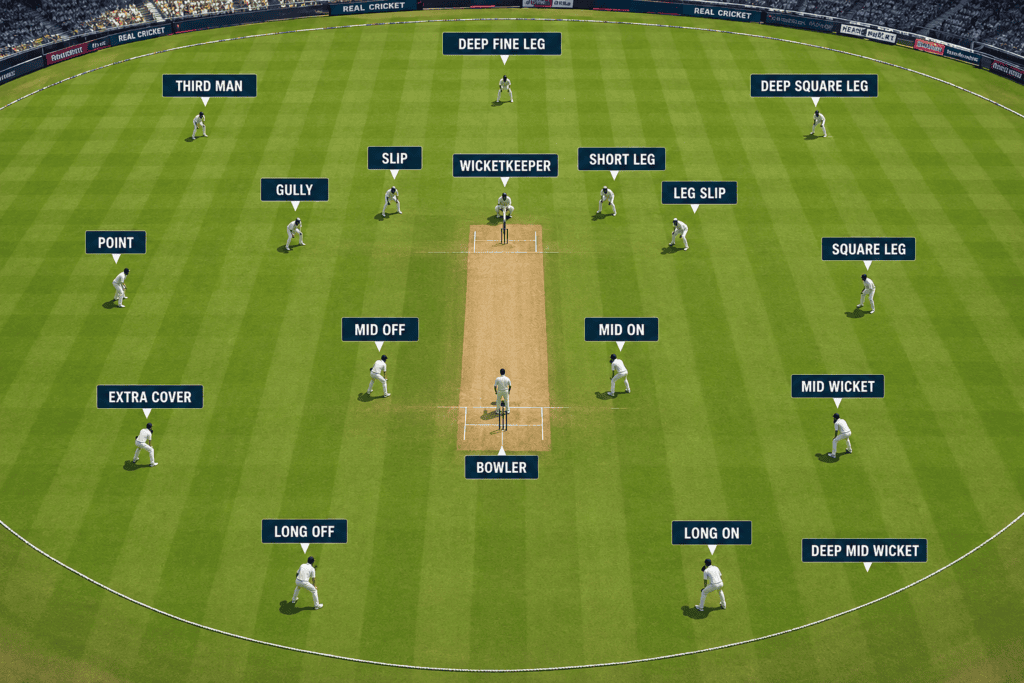
Cricket field positions example diagram
Note: This diagram is for general understanding; minor position adjustments may differ in real matches.
Each position has a tactical purpose. Good field placement can stop boundaries, create pressure, and increase wicket-taking chances.
Can a Team Play With Fewer Than 11 Players?
Yes, in certain situations a team may continue playing with fewer than 11 players, such as:
- A player gets injured
- A player becomes ill
- A player leaves the field permanently
However, teams cannot always replace the missing player fully unless tournament rules allow substitutions. Even with fewer players, the match continues under ICC regulations.
Substitute Players in Cricket
Teams also have substitute players on the bench or outside the field.
Substitutes can:
- Replace injured players temporarily in the field
- Carry drinks and equipment
- Assist the team during breaks
However, in most cases, substitutes cannot bat or bowl unless special playing conditions or rules allow it.
Impact Players in Modern Cricket
In modern T20 leagues, new rules like the Impact Player have been introduced.
This allows teams to:
- Replace one player during the match
- Adjust strategy based on match situation
- Strengthen batting or bowling at key moments
This rule has added more flexibility and excitement to modern cricket, especially in franchise leagues.
Different Cricket Formats but Same Team Size
Cricket has three major international formats, but team size remains the same:
- Test Cricket – 11 players per side
- ODI Cricket – 11 players per side
- T20 Cricket – 11 players per side
Only overs, duration, and strategies change—not the number of players.
Women’s Cricket Teams
Women’s cricket follows exactly the same structure as men’s cricket.
A women’s cricket team includes:
- 11 players
- Batters
- Bowlers
- All-rounders
- Wicketkeeper
Women’s cricket has grown rapidly and is now followed globally with major international tournaments.
Junior and Street Cricket Variations
In local or street cricket, the number of players is flexible depending on availability:
- 5 vs 5
- 6 vs 6
- 8 vs 8
These matches are informal and played for fun. However, official cricket at all levels always follows the 11-player rule.
Importance of Team Balance
Having 11 players is not just a rule—it ensures balance and fairness in the game.
A strong cricket team usually includes:
- Reliable top-order batsmen
- Powerful middle-order hitters
- Fast and spin bowlers
- Skilled all-rounders
- A specialist wicketkeeper
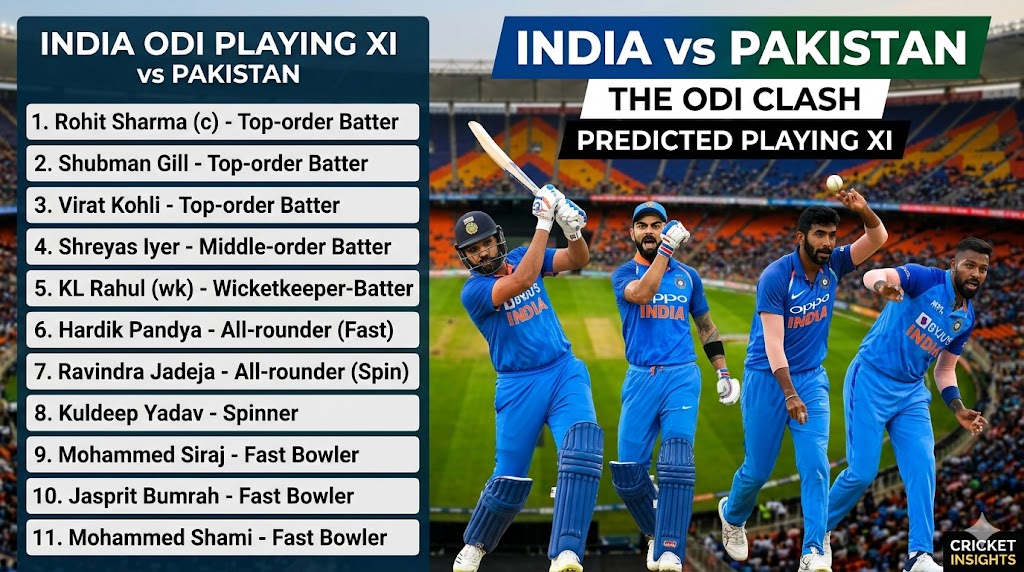
Team selection is often based on pitch conditions, weather, and opposition strategy.
Frequently Asked Questions (FAQs)
Can a Cricket Team Have More Than 11 Players?
No, an official cricket team can only have 11 players on the field during a match. Extra players may be part of the squad but cannot play unless allowed by specific rules.
How Many Bowlers Are Usually in a Cricket Team?
Most cricket teams include 4 to 5 bowling options, including fast bowlers, spin bowlers, and all-rounders.
Is the Number of Players Different in T20, ODI, and Test Cricket?
No, all major cricket formats use 11 players per team. Only the match length and rules vary between formats.
What Is the Role of a Wicketkeeper in Cricket?
A wicketkeeper stands behind the stumps, catches the ball, performs stumpings, and helps prevent extra runs.
Can Substitute Players Bat or Bowl in Cricket?
In most matches, substitute players can field but cannot bat or bowl unless specific competition rules allow it.
Want a complete guide on cricket basics? Read: Cricket Rules, Players and Formats
To know about cricket basics, tips and fitness? Visit: JS Sports Hub Cricket Hub
Conclusion
A cricket team officially consists of 11 players, and each player has an important role in batting, bowling, or fielding. This structure is used in all international formats, including Test matches, ODIs, and T20 cricket. While informal cricket may use different numbers of players, professional cricket always follows the 11-player system. Understanding this basic structure helps beginners enjoy the game more and follow matches with better understanding.